
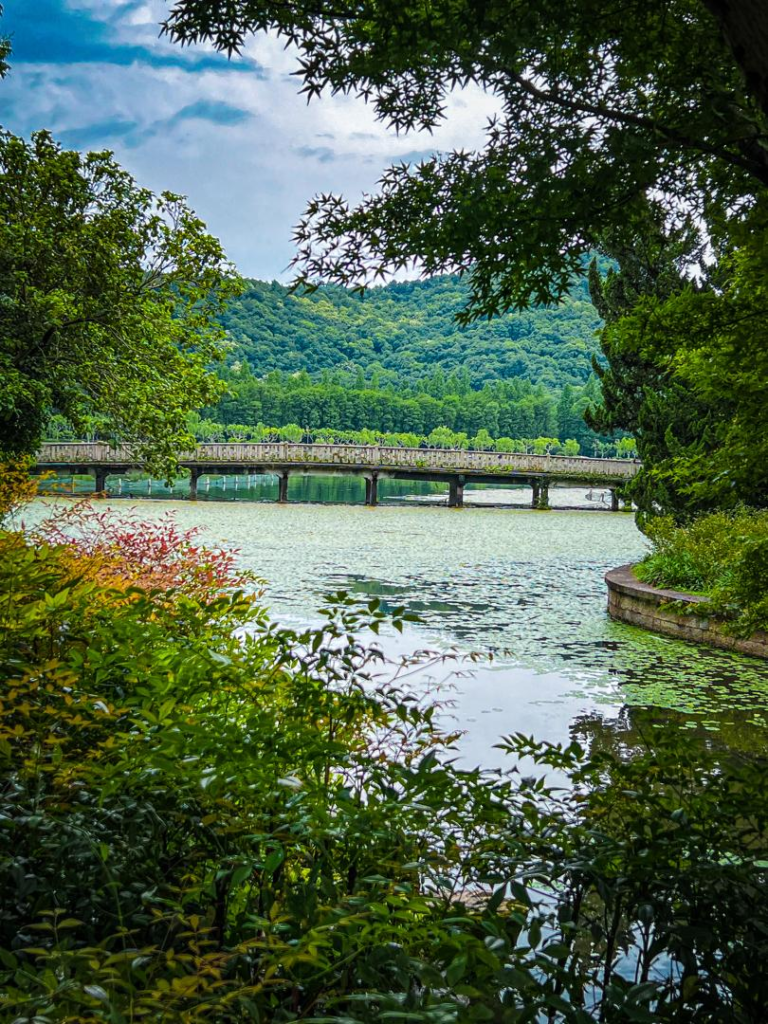
The Chinese have a saying: “Above there is heaven, below there are Suzhou and Hangzhou” (上有天堂,下有苏杭) — a reminder that some places on earth feel impossibly close to paradise. I haven’t visited Suzhou yet, but after spending time in Hangzhou, I can say with certainty that the phrase could not be more true.
In the heart of this vibrant, modern city lies West Lake, a place so poetic and atmospheric that it feels different with every season, every corner, every shift in light. And perhaps what surprised me most was how gentle Hangzhou feels when you slow down — especially for me, as someone who often travels alone as a woman.
There is a quiet safety and softness in Hangzhou that makes it one of my favourite slow travel destinations. It invites you to walk at your own pace, linger where your heart feels light, and discover hidden pockets of calm that many travellers miss when rushing from one attraction to another. Here, slowness feels natural — almost like the city is encouraging you to breathe differently, notice more, and let life unfold gently around you.
Hangzhou As A Slow Travel Destination
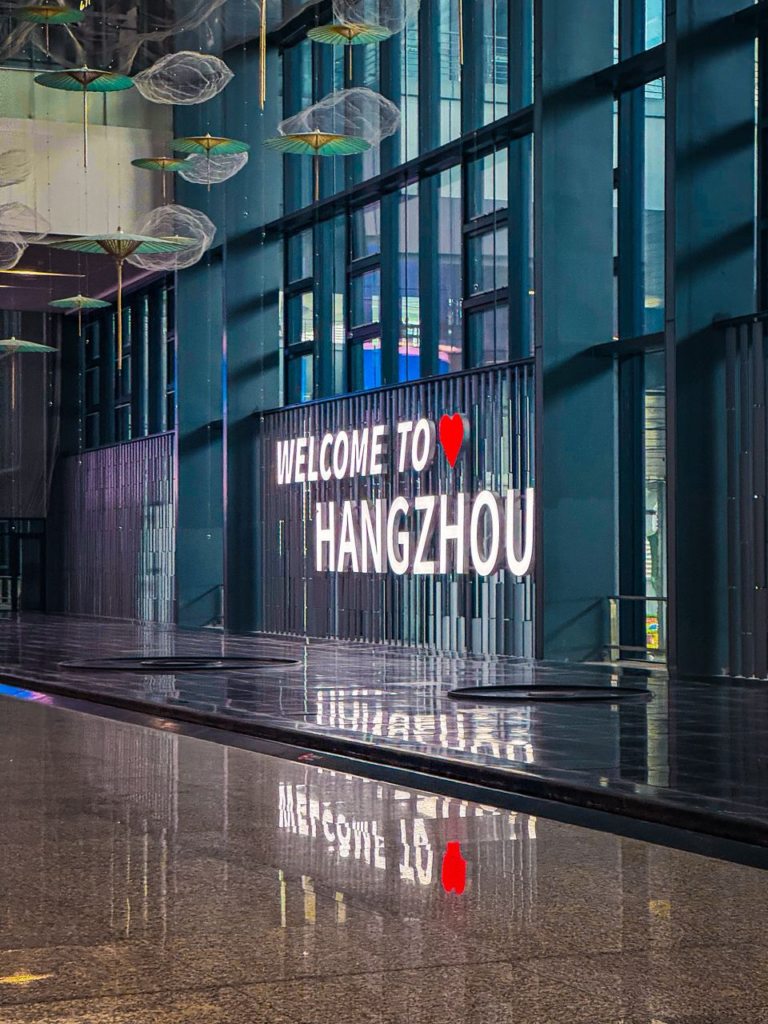
My first impression of Hangzhou was a city alive with movement — tall buildings stretching confidently into the sky, bright city lights glowing well into the night, and an elevated pedestrian crossover connecting all four sides of a massive intersection like veins feeding a fast-paced heartbeat. The traffic, the honking, the constant motion of people rushing from one place to another… everything about it said this is a city that does not slow down.
And yet, even in a place that looks so modern and energetic on the surface, Hangzhou revealed itself to be one of the most natural slow travel destinations I’ve ever experienced.
On my very first morning, instead of staying for the predictable hotel buffet, I wandered off to look for something quieter, something local. That’s when I found a small Chinese-style breakfast stall tucked beside an older building — nothing fancy, just a humble spot where the steam from freshly made soya milk drifted into the air.
I ended up going there every single morning for six days straight. Soya milk, dumplings, and a freshly fried doughstick became my travel ritual. By the third day, the waitress looked up, smiled knowingly, and asked, “Same thing today?” in Mandarin — and all I had to do was nod.
There was something so comforting about that tiny moment of recognition. Amidst the city’s speed, that breakfast stall became my anchor. It reminded me that even in a bustling place like Hangzhou, slowness is always waiting for you — in the familiar warmth of a returning meal, in the quiet rhythm of a local shop, in the way a stranger remembers your face.
These small rituals are exactly what makes Hangzhou such a beautiful slow travel destination: the ability to slip into the city’s everyday life, to find your own rhythm, to let ordinary moments become meaningful.
Finding My Rhythm in Hangzhou
Travelling alone as a woman, these small pockets of routine gave me a sense of grounding I didn’t expect. They became the quiet anchors that shaped my entire Hangzhou experience. Instead of following a rigid Hangzhou itinerary, I found myself moving with intuition — letting the city unfold slowly, one gentle moment at a time. And that decision changed everything.
It was a deliberate choice to not have any fixed itineraries during my trip, and I didn’t plan any day trips either. I wanted to experience Hangzhou the way I wanted to — at my own pace, without rushing or chasing anything. Because of this flexibility, I was able to enjoy the beautiful West Lake from different angles, at different times of the day, each revealing a new side of the city.
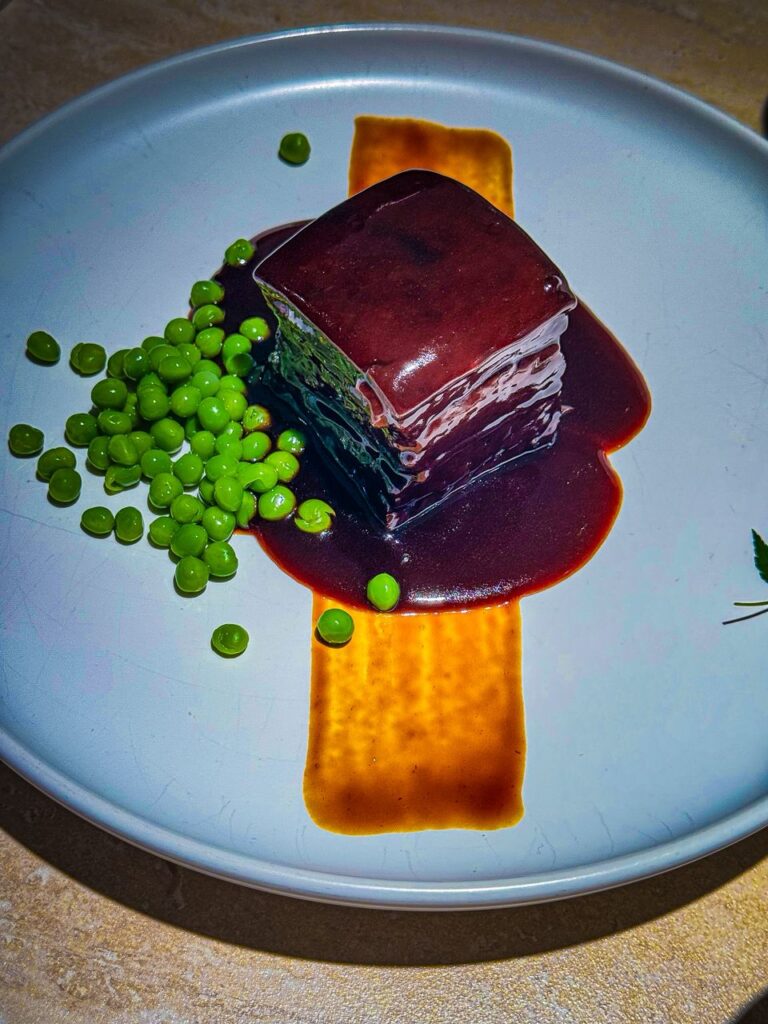
One afternoon, I met up with an intern who once worked with me during my days in a Chinese organisation. To my delight, she is now a senior employee at Alibaba and doing incredibly well. Over a relaxed lunch, I tried Dongpo meat — a signature of Hangzhou — and it felt like one of those small, grounding moments the city does so well.. Moments like these remind me what I treasure most about my leadership life — the connections built over the years, the people whose journeys I’ve been privileged to witness.
Despite the years that had passed, we slipped easily back into our old rhythm, chatting over a plate of Dongpo meat, one of Hangzhou’s most beloved signature dishes. Sitting there with her, sharing stories like locals rather than travellers, was one of my favourite moments of the trip. It was the kind of experience that only happens when you slow down and give life space to surprise you.
Letting Intuition Shape My Days
Another deliberate decision I made for my Hangzhou trip was to limit myself to just one major sightseeing activity per day. If my intention was to see West Lake, then that would be my focus for the morning. I’d walk slowly along the water, notice how the light shifted across the surface, and let myself drift from one viewpoint to another. After that, I would look for a nearby spot for lunch and end the afternoon in a quiet teahouse. This rhythm allowed me to reduce unnecessary commuting, avoid rushing, and truly savour each part of the day.
For me, especially travelling alone as a woman, slowing down wasn’t only about enjoying the scenery — it was about feeling grounded and fully present. When you move gently through a city, you notice more. You sense your surroundings better. You become more aware of the people, the atmosphere, the energy of each neighbourhood. There’s a calm confidence that comes from being able to listen to your own intuition, to observe without hurrying, and to choose what feels right in each moment.
Slowness creates space for safety, clarity, and comfort — and in Hangzhou, it allowed me to feel deeply connected to the city while also feeling completely at ease on my own.
Quiet Places To Visit in Hangzhou
I must admit that I’ve yet to see all of Hangzhou since I’ve only visited once — and I truly took my time across the entire seven days. But perhaps that’s the beauty of slow travel: you don’t need to see everything to feel connected to a place. So here are some of my favourite quiet places to visit in Hangzhou, especially if you enjoy wandering, reflecting, and discovering a city gently.
Hangzhou West Lake (西湖, Xī Hú)
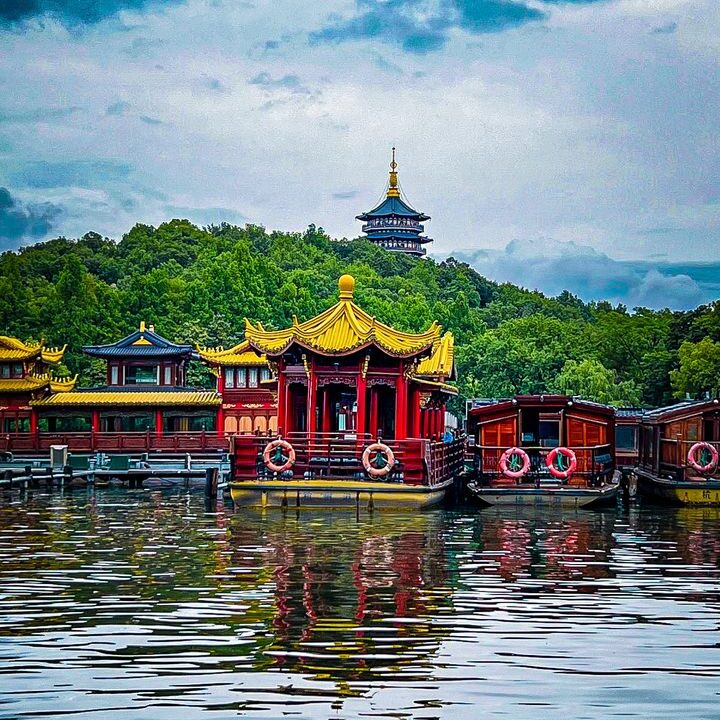
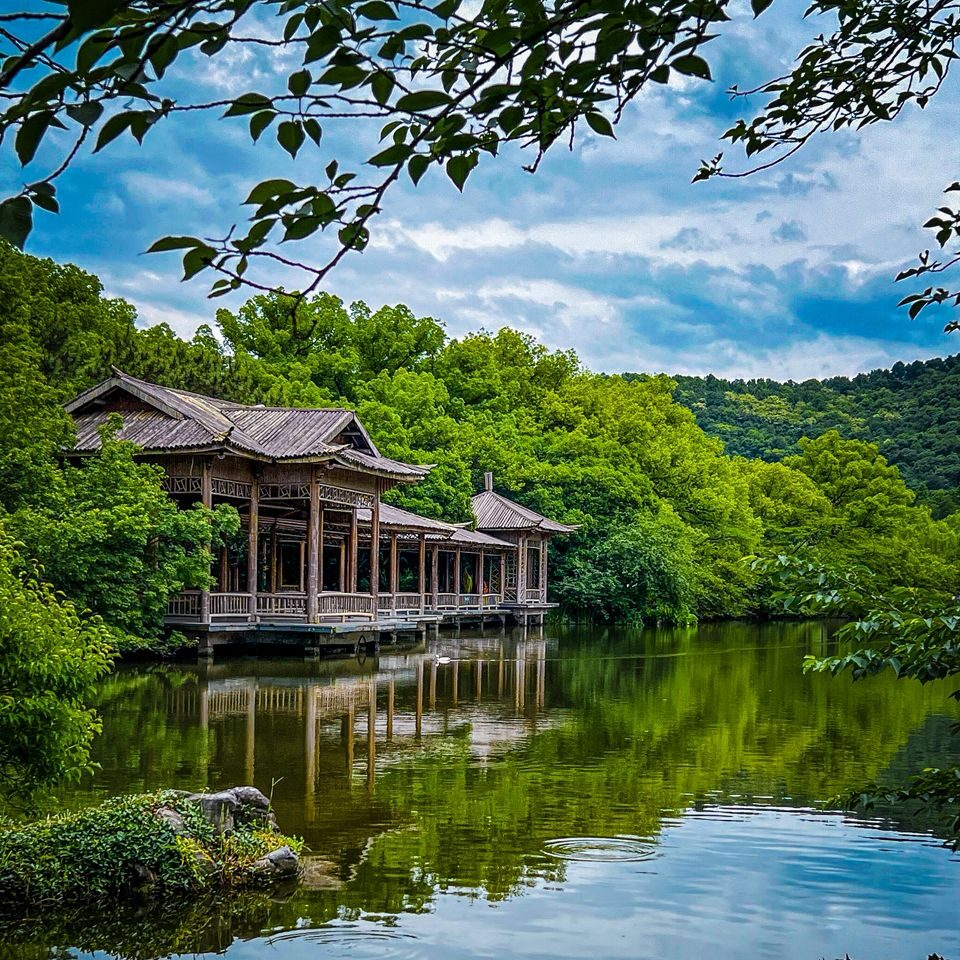
I spent the most time here — during the day, at sunset, at night, and even in the rain — exploring different sections of the lake through different entry points. If you must know, West Lake is huge. It’s not something you can “cover” in a few hours. Well, technically you can, if you’re treating it as just that: a lake.
But the truth is, West Lake is far more than a body of water.
It’s a living archive of Chinese poetry, philosophy, and classical beauty — a place layered with legends, literature, and quiet symbolism. Every curve of the shoreline, every willow tree, every pavilion has a story behind it.
Take your time, walk through the Ten Scenes of West Lake, which I implore you to read up before walking around as they were really interesting, and then end your trip with the Impression West Lake live performance.
If you asked me, West Lake isn’t meant to be “seen.”
It’s meant to be experienced.
To be walked.
To be sat with.
To be breathed in.
Walk a little slower and you’ll start to feel it.
The way the mist hangs over the water in the morning.
The soft rustling of willow leaves as the breeze moves through them.
The changing colour of the lake as the sun rises or falls.
The elderly locals doing tai chi beneath the trees.
This is where Hangzhou reveals itself as a place made for slow days and long thoughts.
Leifeng Pagoda
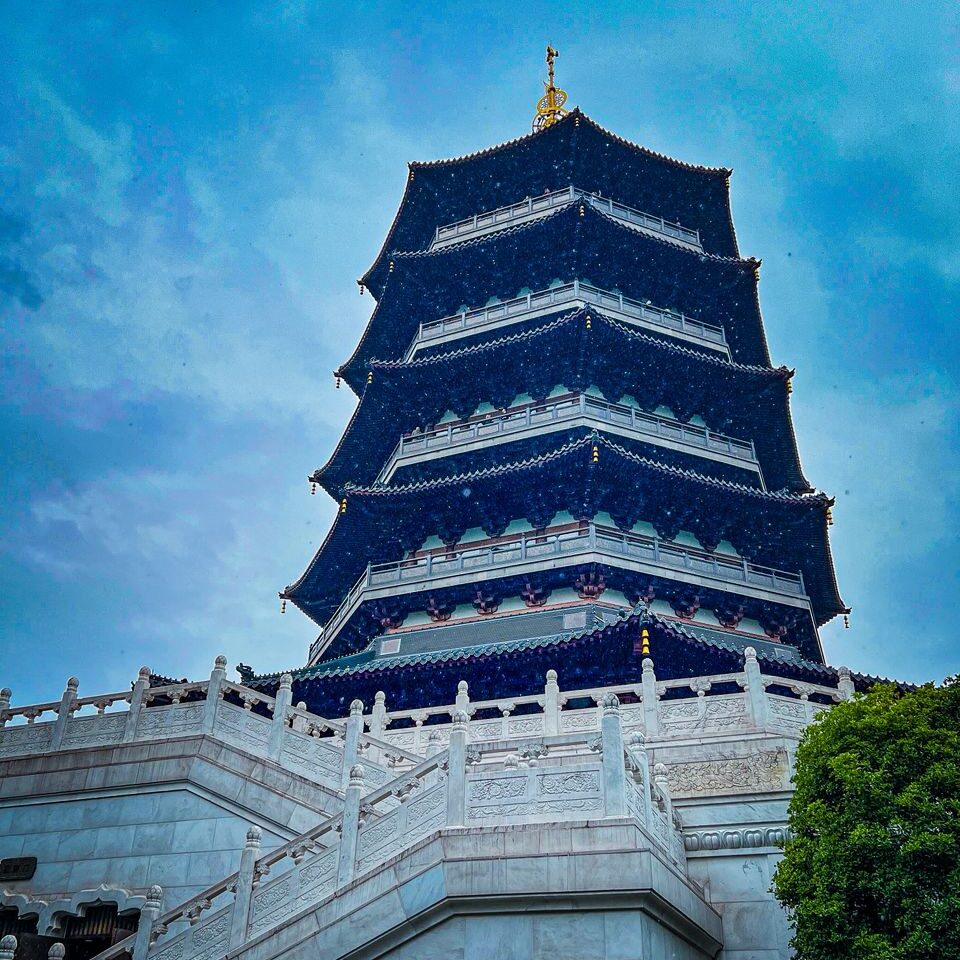
Many visitors usually combine a visit to Leifeng Pagoda with their West Lake walkabout, but personally, I feel this place deserves a morning of its own. There is something sacred and grounding about giving it space — not rushing through it as part of a checklist, but allowing yourself to experience it fully.
Take the lift up to the very top and spend time seeing West Lake from above, moving slowly through each level and looking out from every corner of the pagoda. The panoramic view alone can keep you there for a long while, especially if you enjoy quiet observation.
I visited Leifeng Pagoda in the rain on my last morning in Hangzhou, and it felt like the perfect closing chapter to my trip. There was an emotional stillness in the air, the kind that only rain can bring. The mist softened the lake below, and the sound of droplets against the pagoda made everything feel gentle, reflective, and poetic.
After descending, I found a small coffee shop right beside the pagoda. I ended up sitting there for a few hours, hiding from the rain and watching Leifeng Pagoda through the window as I held a warm cup of coffee. It was one of those moments where there was nothing to do except be present — to sit, breathe, and let the quiet of the morning settle into you. No overthinking. No rushing. Just feeling.
Lingyin Temple
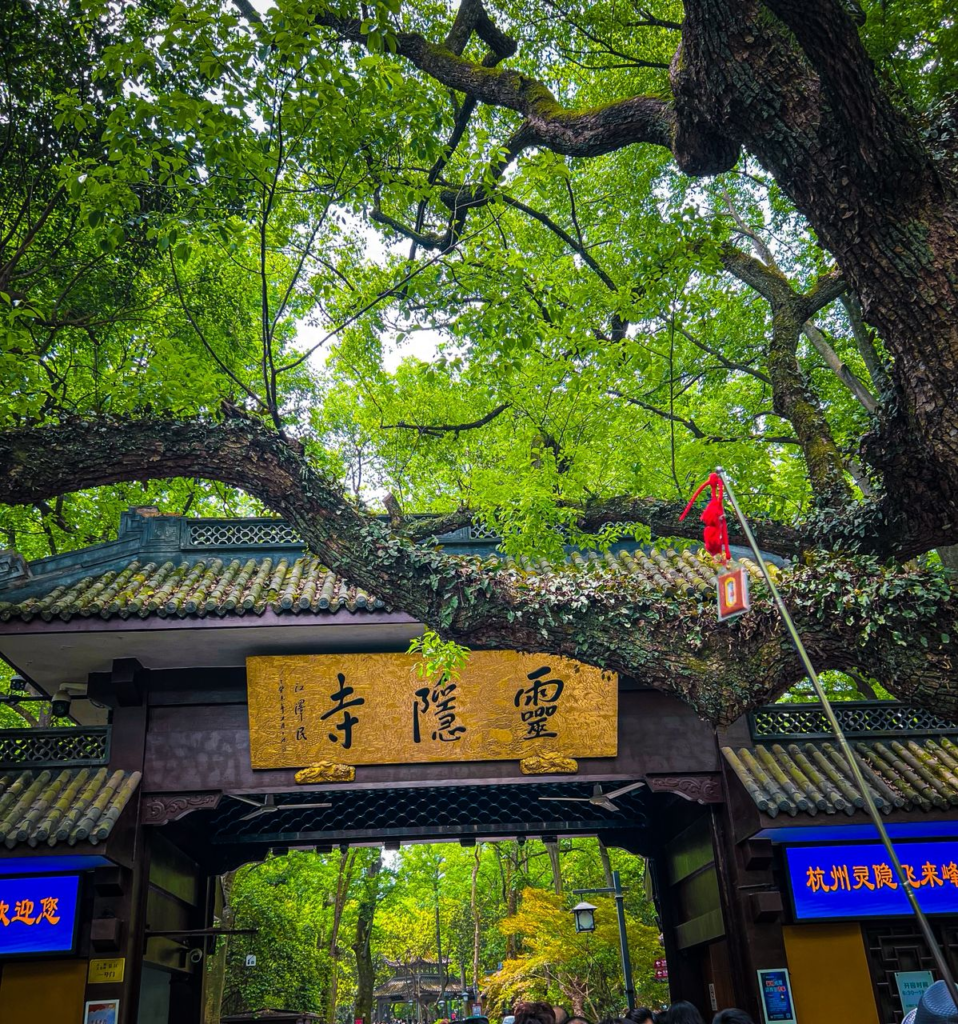
Despite its name meaning “Temple of the Soul’s Retreat,” Lingyin Temple is not exactly one of my favourite quiet places to visit in Hangzhou — mostly because it is almost never quiet. Even if you arrive first thing in the morning, you’ll likely find yourself in a queue, surrounded by tour groups and visitors eager to enter the main halls. The prayer areas are vibrant, crowded, and full of movement rather than stillness.
Once you walk past the central halls, Lingyin opens up in a different way. The crowds thin out, the noise softens, and small hidden sections appear — stone paths, shaded benches, quiet courtyards where time feels slower. These pockets of peace are where I found myself lingering, simply watching people pass by. There’s a strange comfort in witnessing the everyday rituals of others, especially when you’re travelling alone as a woman — it makes you feel connected without needing to participate.
When I first arrived, I signed up for a guided tour at the ticketing booth. I’ve always loved listening to histories, local stories, and small cultural details — to me, it’s one of the best ways to understand a place, even if it’s a busy one. The guide walked us through the temple’s significance, its protectors, its architectural symbols, and its centuries-old legends.
But my favourite part came after the tour ended. I wandered off on my own, letting my feet choose the path. Eventually, I found a quiet spot tucked between two stone walls, away from the flow of visitors. I sat there with my journal, jotting down small thoughts and observations, and for a brief moment, Lingyin Temple really did feel like a retreat — not because the temple became quiet, but because I did.
Longjing Village
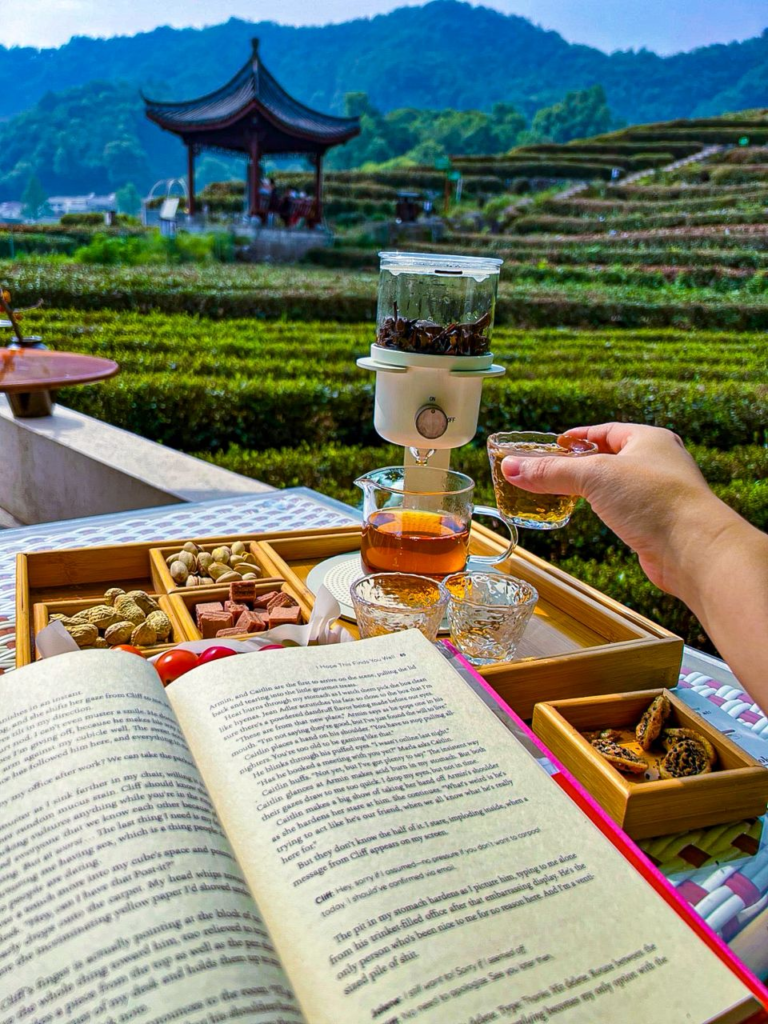
Longjing tea is one of the finest green teas in the world, and Hangzhou is its birthplace — specifically the serene and historic Longjing Village. Yes, you read that right: there is an entire tea village inside the city of Hangzhou. And to me, this contrast is exactly what makes Hangzhou one of the most unique slow travel destinations in China. You can leave the busy streets behind and, within minutes, find yourself surrounded by rolling tea fields, mountain air, and quiet moments that feel centuries away.
With so many charming teahouses scattered throughout the village, I was completely spoilt for choice. After wandering through narrow paths lined with tea bushes, I finally settled into a beautiful spot called Café 82 — a hidden gem tucked right into the heart of the plantation.
Though the outdoor seating was limited, the view alone made it worth the wait. Indoors, the space was bright, calm, and perfect for lingering. Set amidst lush rows of green tea fields, the café offered exactly what I crave most when I travel slowly: a peaceful corner to sit, sip, and simply be. It was the kind of place where time felt suspended. I enjoyed my tea, snacked on small treats, read my book, and occasionally looked up just to absorb the tranquility of the landscape in front of me.
If tea isn’t your usual choice, don’t worry — Longjing Village still belongs on your list of places to visit in Hangzhou. Café 82 serves excellent coffee too; I ordered the coconut brown sugar latte, and it was absolutely delicious.
There’s something deeply grounding about spending an afternoon in Longjing Village — the scent of fresh leaves, the hush of the fields, the slow rhythm of life unfolding around you. It’s a reminder that in Hangzhou, even a simple cup of tea can become a moment of stillness and renewal.
Moving through these quiet corners of Hangzhou — from the poetic edges of West Lake to the misty heights of Leifeng Pagoda, the hidden nooks of Lingyin Temple, and the tranquil tea fields of Longjing Village — reminded me how gentle this city can be when you let it unfold slowly. Each place offered a different kind of stillness, a different way of being present, and a different reminder of why Hangzhou is such a comforting destination for travelers who prefer to wander rather than rush.
There are of course more places in Hangzhou that need to be experienced and visited, and I have barely scratched the surface – I will leave them for my next trip when I re-visit Hangzhou.
And as someone who often travels alone as a woman, these moments of slowness and the knowledge that i will return again, gave me something even more important than beautiful views: they gave me a sense of grounding, safety, and quiet confidence. Hangzhou felt like a city where I could exhale, observe, and move at my own pace without feeling out of place.
Which brings me to something I get asked often — What is it like travelling alone as a woman in Hangzhou?
Solo Woman Traveler Tips in Hangzhou
Frankly speaking, I felt incredibly safe walking around Hangzhou alone — whether it was during the day, late at night, or in the early quiet hours before sunrise. Before my trip, I remember calling a friend to ask if it was safe to explore on my own. He laughed and said, “Hangzhou has enough CCTVs to protect you better than a bodyguard.” And honestly… he wasn’t wrong.
Even my early-morning strolls along West Lake felt peaceful and comforting. The lake is already alive at sunrise — elderly locals practising tai chi, couples taking slow walks, people stretching beneath willow trees. There’s an unspoken sense of community that makes you feel instantly at ease.
From a transportation perspective, Hangzhou is wonderfully convenient for solo travelers. The city is exceptionally well-connected by public transport, and navigating it is much easier than it looks. A useful tool is the Amap (Gaode) app, which provides clear walking and transit routes, nearby attractions, food recommendations, and real-time updates. It was a lifesaver for someone like me who can speak Chinese but can’t fully rely on apps like Meituan, which are Chinese-only.
Most days, I preferred walking — it allowed me to observe the city slowly, discover unexpected corners, and enjoy the everyday rhythm of Hangzhou. But when I needed to travel further, I relied on Didi, China’s e-hailing app. The good news is:
- Didi has both Chinese and English versions
- It’s safe and easy to use
- You can book rides directly through Alipay or WeChat, both of which integrate the service seamlessly
Everything felt smooth, intuitive, and traveller-friendly, which made Hangzhou an ideal destination for a solo woman traveler — and especially for those of us who like to take our time, wander freely, and immerse ourselves in a city without the anxiety of logistics weighing us down.
What Hangzhou Taught Me When I Slow Down
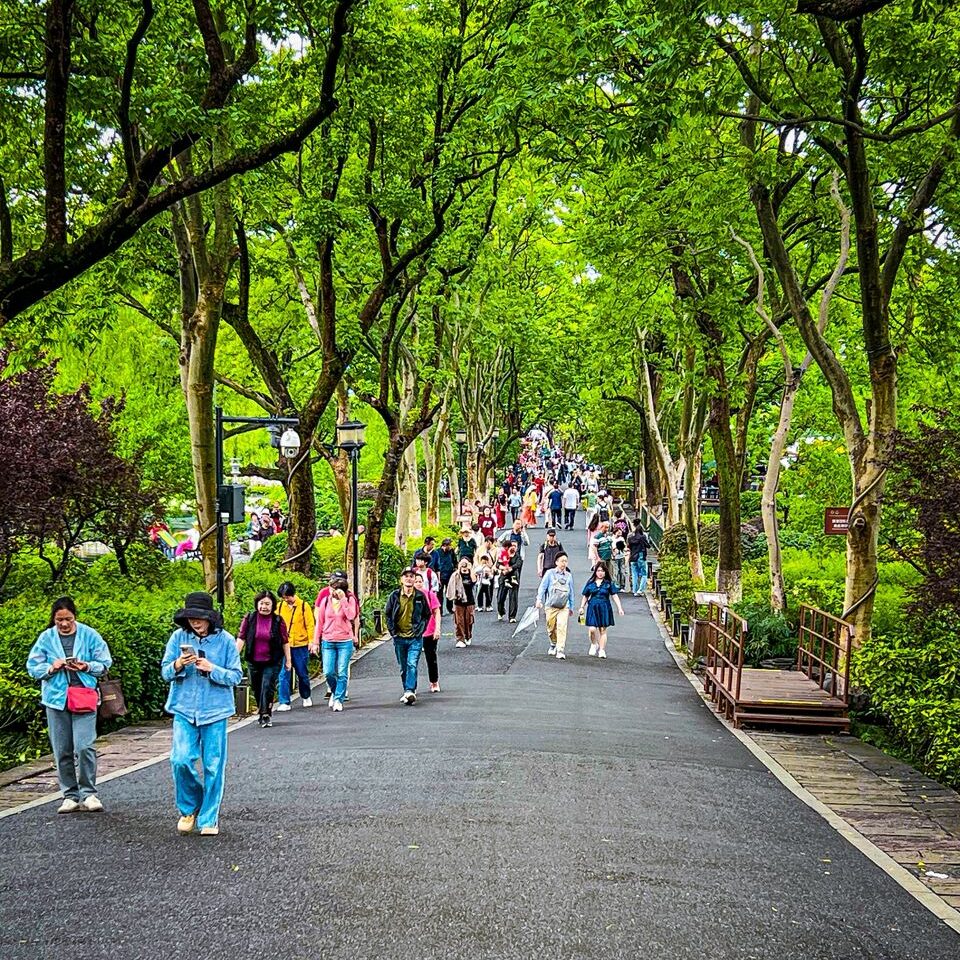
In Hangzhou, I rediscovered a quiet courage within myself — the kind that doesn’t arrive with fanfare, but grows gently each time you step into something unfamiliar. As a creature of habit, I’ve always gravitated towards cities I know well for my solo trips: Seoul, Taipei, Shenzhen — places where familiarity feels like a safety net.
But Hangzhou, in all its unfamiliarity, taught me something different.
It showed me that entering a new place alone doesn’t have to be intimidating. It can be soft. It can be grounding. It can be peaceful. And sometimes, it can feel even safer than places you already know. Walking along West Lake, lingering in a teahouse in Longjing Village, wandering through Lingyin Temple’s hidden corners, or navigating busy intersections — each small experience stretched me in ways I didn’t expect.
Slowing down in Hangzhou taught me to listen to myself again.
To trust my instincts.
To move without rushing.
To let curiosity guide me instead of fear.
Most of all, it reminded me that a place doesn’t have to be familiar to make you feel at ease. Sometimes, a destination becomes comforting simply because you allow yourself to move through it gently — noticing the kindness of strangers, the rhythm beneath the noise, the quiet corners waiting for you.
Hangzhou didn’t just show me a beautiful city.
It showed me a more open, braver, softer version of myself.
And that, more than anything, is the true gift of slow travel.
