
There is a quiet kind of magic in slow travel — the kind you only notice when you finally stop rushing.
For me, slow travel often looks like this: sitting in a teahouse in a foreign city, sipping something warm, reading a book, and letting the world move gently around me. I don’t sit there with an agenda or a checklist to complete. I sit there to breathe. To think. To let my mind settle after months of moving too fast. Sometimes, in those moments of stillness, I find clarity for the next step in my life without even trying.
I was never someone who believed in “checklist travel.” The kind of travel where you race from one attraction to another, collecting photos instead of memories, proving you “did it all.” For a while, this fast, frantic style of traveling took over social media — the pressure to see more, do more, and fit everything into a 3-day itinerary. But more people today are realising how empty and exhausting that can feel.
Travelers everywhere are turning toward slow travel: a more mindful, intentional way of experiencing a destination. Instead of rushing, they choose to wander. Instead of chasing landmarks, they seek connection. Instead of ticking boxes, they allow themselves to simply be.
This article is a gentle slow travel guide — an invitation to pause, breathe, and rediscover the art of seeing more by doing less. Whether you’re wondering what slow travel really means or trying to figure out how to choose a slow travel destination, this is where we begin.
What Is Slow Travel?
One of my favourite quotes about life is, “The art of living is not in speed, but in depth.”
I’ve found that it applies not only to how I work or move through the world, but also to how I travel. Whenever someone asks me, “What is slow travel?” I always come back to this idea—depth over speed, presence over pressure.
For me, slow travel is the simple act of slowing down while you’re on the road. It’s choosing to see a place the way it naturally unfolds, not the way an itinerary forces it to. It’s giving yourself permission to stand in front of a beautiful view and just stay there—not because you need a photo for proof, but because the moment itself is enough.
Slow travel is sitting in the same café two days in a row because you love how the light falls through the window. It’s visiting a neighbourhood instead of a landmark. It’s returning to a destination in a different season just to see how the air, the colours, and the energy shift. It’s noticing tiny details most people rush past—the smell of freshly steamed buns, the sound of an elderly couple arguing affectionately in their dialect, the way a city wakes up before the crowds arrive.
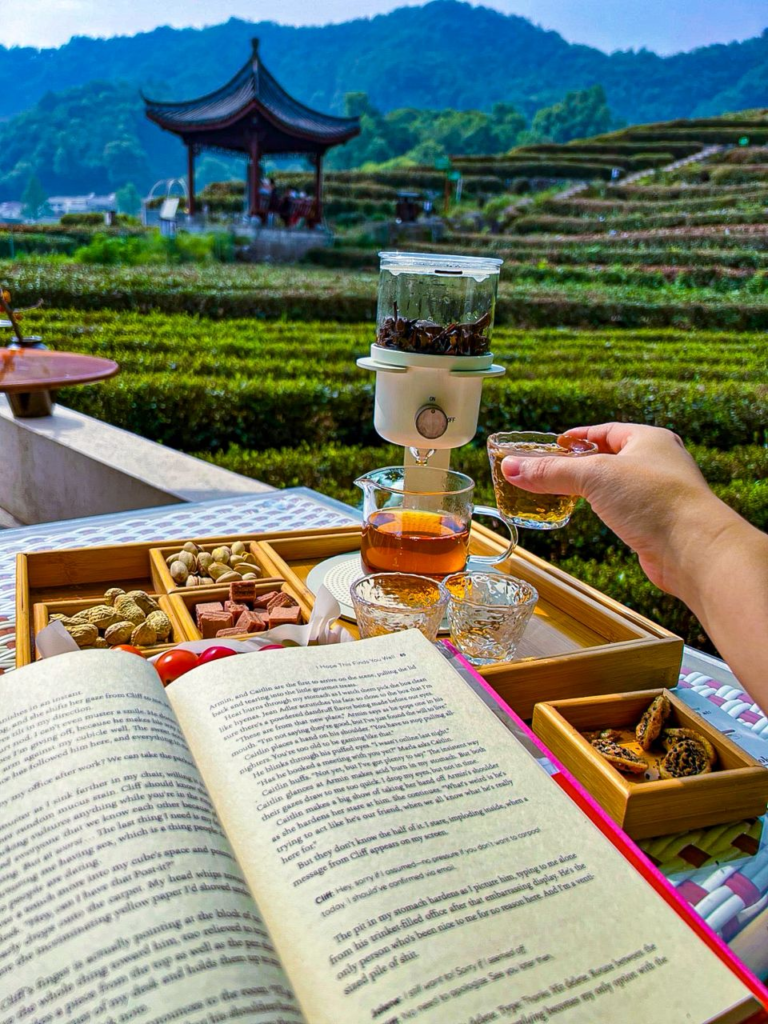
The truth is, many of us don’t get the luxury of slowness in our daily lives. I certainly don’t.
Most weekdays feel like a sprint: deadlines, pitches, back-to-back meetings, rushing home to cook, vet appointments for my dogs, family obligations, and the mental checklist that never ends. My brain is always turned on, always planning, always moving.
So when I travel, the ability to slow down isn’t just a preference—it’s a form of healing. It’s a quiet protest against the constant rush of modern life. And I think that’s why slow travel has become increasingly popular. More people are realising that traveling fast doesn’t always leave you fulfilled. You might return home with a full camera roll, but an empty heart.
That doesn’t mean fast travel is wrong—there is nothing wrong with wanting to see as much as you can when time is limited. But there’s a growing recognition that meaningful travel doesn’t always mean more. Sometimes the most beautiful parts of a trip are the ones we didn’t plan.
To understand it better, it helps to look at how slow travel contrasts with the more common “fast travel” approach. Fast travel focuses on squeezing in as many attractions as possible. Slow travel does the opposite: it prioritises depth, connection, and presence. Fast travel is driven by itineraries; slow travel is guided by curiosity. Fast travel measures success by how much you covered; slow travel measures it by how much you truly experienced.
One leaves you tired.
The other leaves you full.
And that, to me, is the heart of slow travel—the choice to move gently, to pay attention, and to let a destination change you in small, meaningful ways.
Slow Travel Guide – Why It Matters and Benefits
Burnout culture today is no longer a theory — it’s a lived reality.
Especially here in Asia. Malaysia, where I come from, consistently ranks among the worst in the world for burnout. People move fast, work fast, recover fast, and are expected to repeat the cycle endlessly. So imagine taking a “holiday”… only to rush through 20,000 steps a day, squeezing in attractions from morning to night. You come home needing another holiday just to recover from your holiday.
That’s where the philosophy behind slow travel becomes important — and why a proper slow travel guide is no longer a niche idea, but something more travellers are actively searching for. It’s a gentle rebellion against the pressure to rush, achieve, and optimise every moment. We see this reflected everywhere online too: TikTok ASMR reset videos, slow weekend routines, people learning to savour their mornings instead of racing through them.
One of my personal favourites is the creator @thuydao__, who shares her quiet, beautifully intentional life in her little her86m2 world — tending to her garden, harvesting fresh greens, and cooking meals that feel like a warm hug. Watching her videos always reminds me that slowness is not laziness; it’s a form of nourishment. And that same feeling is exactly what slow travel offers when you’re away from home.
Slow travel also helps us navigate one of the biggest problems in modern tourism: over-tourism. We’ve all been there — dreaming for years about finally seeing a certain monument, only to arrive and be overwhelmed not by the sight, but by the crowd. This was exactly what happened to me at the Blue Mosque in Istanbul. I had imagined a quiet, sacred moment. Instead, I was met with a sea of people so dense that there wasn’t even enough space to place my shoes. I ended up walking around carrying them in my hand, and within five minutes, I left — completely drained instead of inspired.
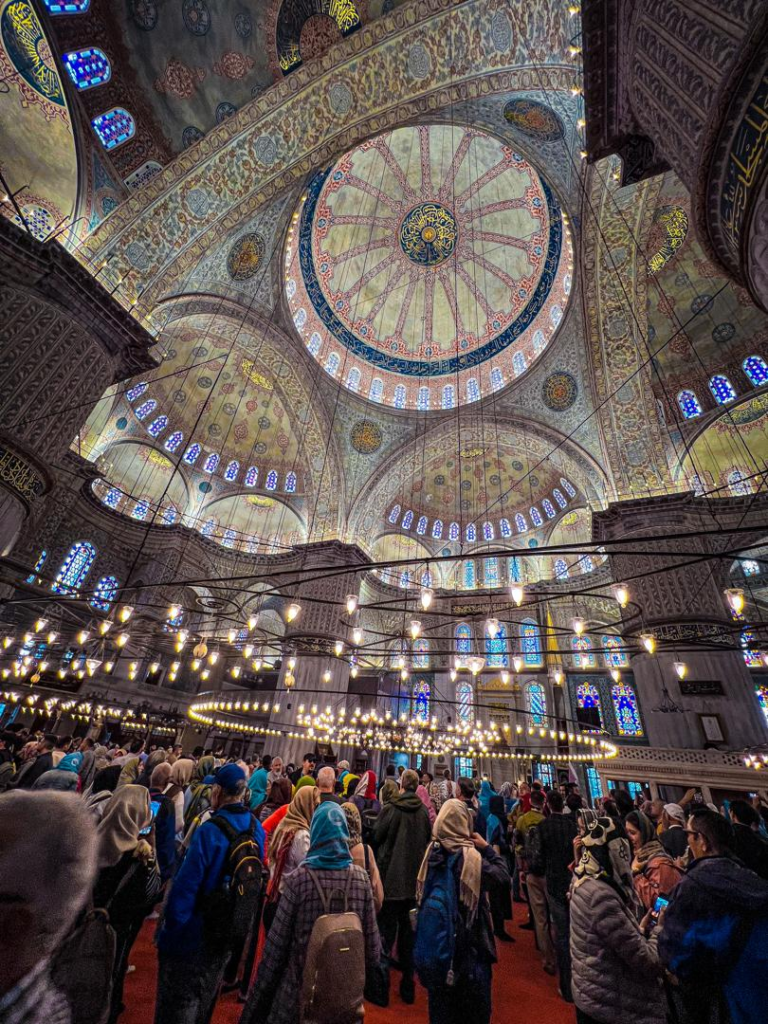
It wasn’t the Blue Mosque’s fault.
It was the pace, the pressure, the crowd, the noise — the opposite of presence.
Slow travel isn’t about avoiding popular spots, but it is about experiencing places in ways that feel meaningful to you. And that’s exactly what a good slow travel guide should help you do: uncover the quieter, deeper layers of a destination. Sometimes that means wandering off the beaten path. For example, most people who visit Seoul will stand in front of Gwanghwamun Gate and admire the King Sejong statue. But just below the statue is an entrance to one of the most beautiful, immersive underground museums in the city — a place many people miss because they’re rushing to the next stop.
That’s the magic of moving slowly: you discover what others don’t even notice.
And when you commit to slower, more intentional travel, the benefits unfold naturally — in ways that stay with you long after the trip ends.
How to Practice Slow Travel
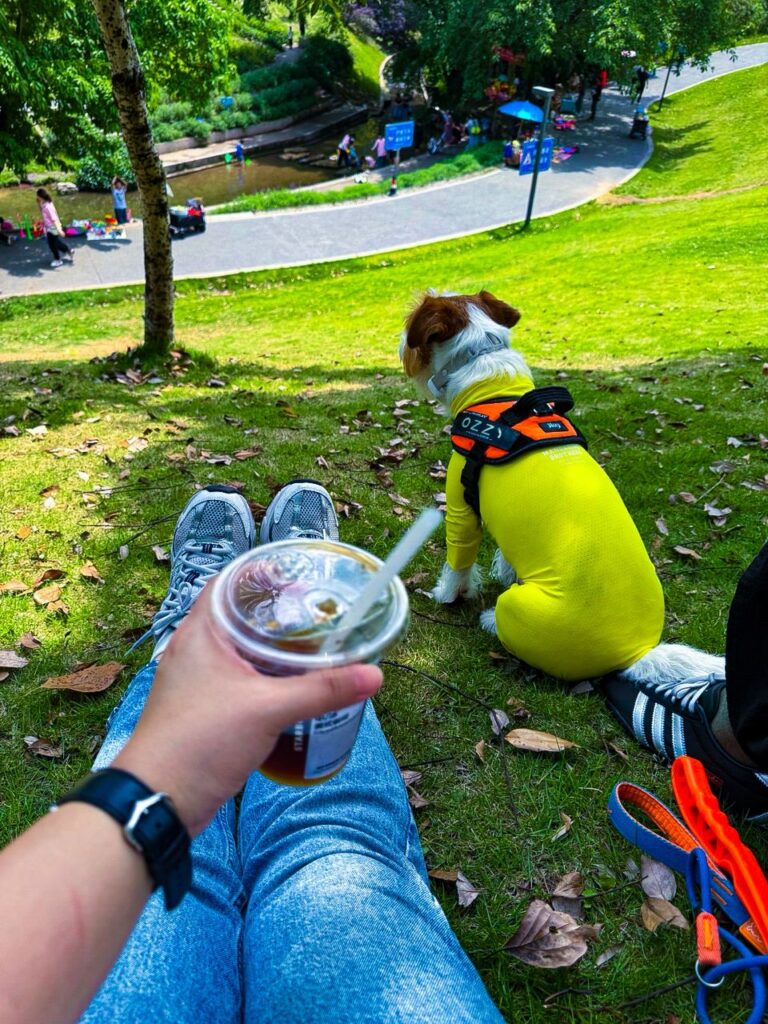
One thing I want to be clear about: this website isn’t meant to preach. It’s simply a space where I share what I’ve learned over the years — the habits, mindsets, and tiny rituals that have helped me manage my thoughts, emotions, and pressure levels.
As someone in a senior C-suite role, the reality is this: the higher you go, the lonelier it gets. Not metaphorically — but realistically. There are days when the stress is yours alone to carry, and you don’t always have someone to share it with. That’s why travel, especially slow travel and taking quietcations, became more than a hobby for me. It became a form of emotional maintenance, a way to release the mental load that builds up quietly over time.
Even when work becomes overwhelming, I make sure I take my annual leave. Not as a privilege, but as a necessity. Over the years, I’ve learned to plan my yearly leave calendar carefully — maximising every break, especially since Malaysia is known for having some of the most public holidays in the world. With just a bit of planning, even limited leave days can be stretched into deeper, more meaningful rest.
And this is where the true practice of slow travel begins.
The single most important thing I do on every trip is this: I choose fewer destinations and stay longer in each place.
If I have 5–7 days, I don’t hop around multiple cities. I stay in one. This reduces the stress of constant packing, unpacking, commuting, and assimilating into a new environment every two days. It gives me the freedom to plan days for sightseeing, and also days where I don’t plan anything at all.
Those unstructured days are usually my favourite. Sometimes I spend them wandering through neighbourhoods, finding a local café and sitting there for hours. Other times, I buy some bread and fruit, pick a spot in a park, and read — like the afternoons I spent in Busan and the quiet moments I soaked in at a park in Paris. There’s something deeply peaceful about giving yourself permission to exist without an agenda.
This, to me, is the heart of any slow travel guide:
Plan less. Feel more. Experience freely.
Here are a few gentle principles that guide the way I travel slowly:
- Choose fewer destinations – Give your mind and body the chance to settle into a place instead of rushing between multiple cities.
- Spend longer time in each place – Let the city unfold at its own pace. Slow travel is richer when you have time to breathe.
- Allow unstructured days – Have days where you “do nothing,” but end up feeling everything — the air, the mood, the rhythm of the city.
- Prioritise cafés, neighbourhoods, and public transport – This is where real life happens. Not in tourist queues, but in the small rituals of a city.
- Let your mood guide your day – If you feel like walking, walk. If you feel like resting, rest. Slow travel is an internal compass, not an itinerary.
- Journal or reflect daily – Even a few lines help you absorb more. It turns travel into a conversation with yourself.
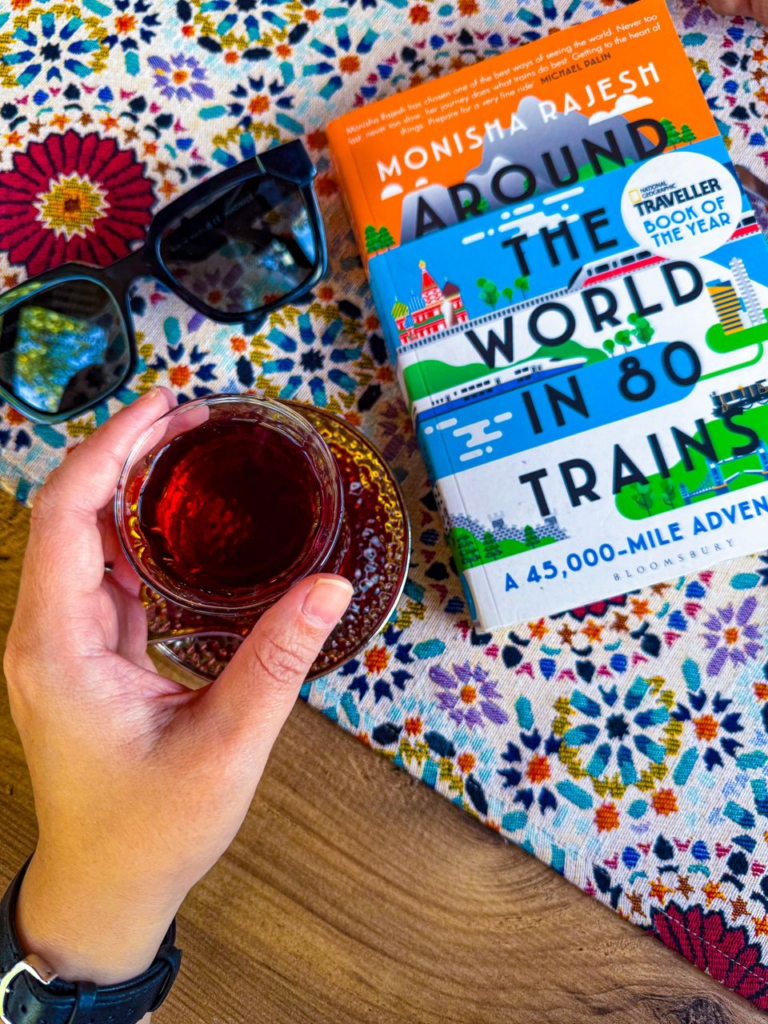
When you approach travel this way, you stop treating your holiday like a project. You stop rushing from one landmark to another. You begin to feel the city instead of conquering it.
And somewhere along the way — in a café, on a quiet street, in a park, on a train — you realise that slow travel isn’t just a style of moving through the world. It’s a way of coming home to yourself.
How To Choose a Slow Travel Destination
People often ask me how to choose a slow travel destination, but the truth is — there really isn’t a fixed theory or complicated rationale behind it. Any place in the world can become a slow travel destination if you decide to experience it slowly. It’s less about the choice, and more about the mindset you bring with you.
Slow travel isn’t determined by the destination; it’s shaped by your intention.
So instead of telling you how to choose a slow travel destination in a step-by-step way, I want to share three of my personal favourites — places where I felt held, unhurried, inspired, and grounded. These cities taught me that slowness is often found where you least expect it.
Busan, South Korea
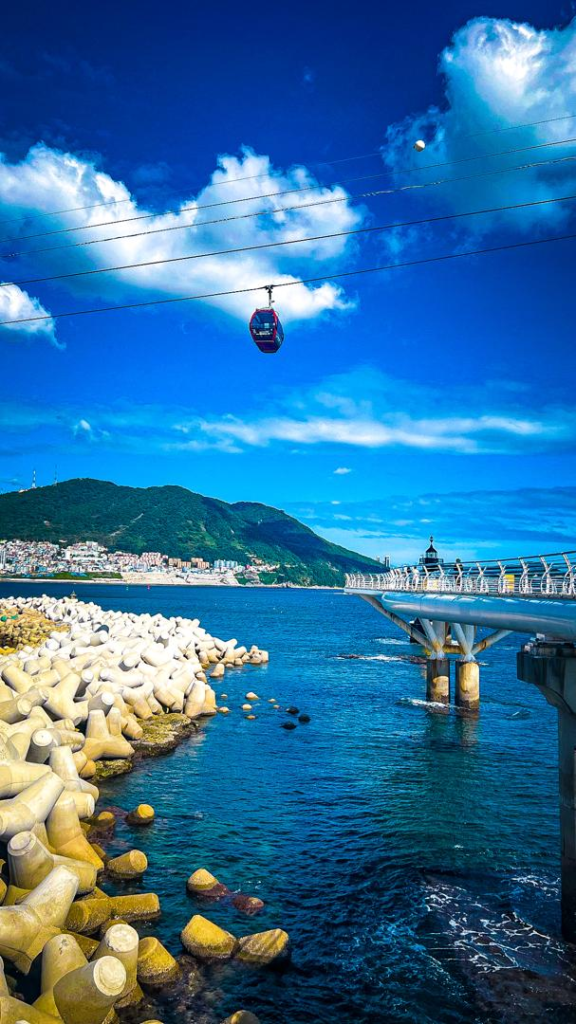
This might surprise people, especially since I’ve been to Seoul more than ten times and truly love the city. But the moment I arrived in Busan, I felt something different — calmer, softer, slower.
Busan has a gentle rhythm, one that invites you to linger instead of rush. I spent hours in its coastal cafés, reading while listening to waves crash against the shore. There was no pressure to move quickly or to “tick off” attractions. It was enough to simply be there, breathing in the salt air.
If you’re ever unsure how to choose a slow travel destination, start with places that naturally slow your heartbeat down. Busan did that for me instantly.
Hangzhou, China
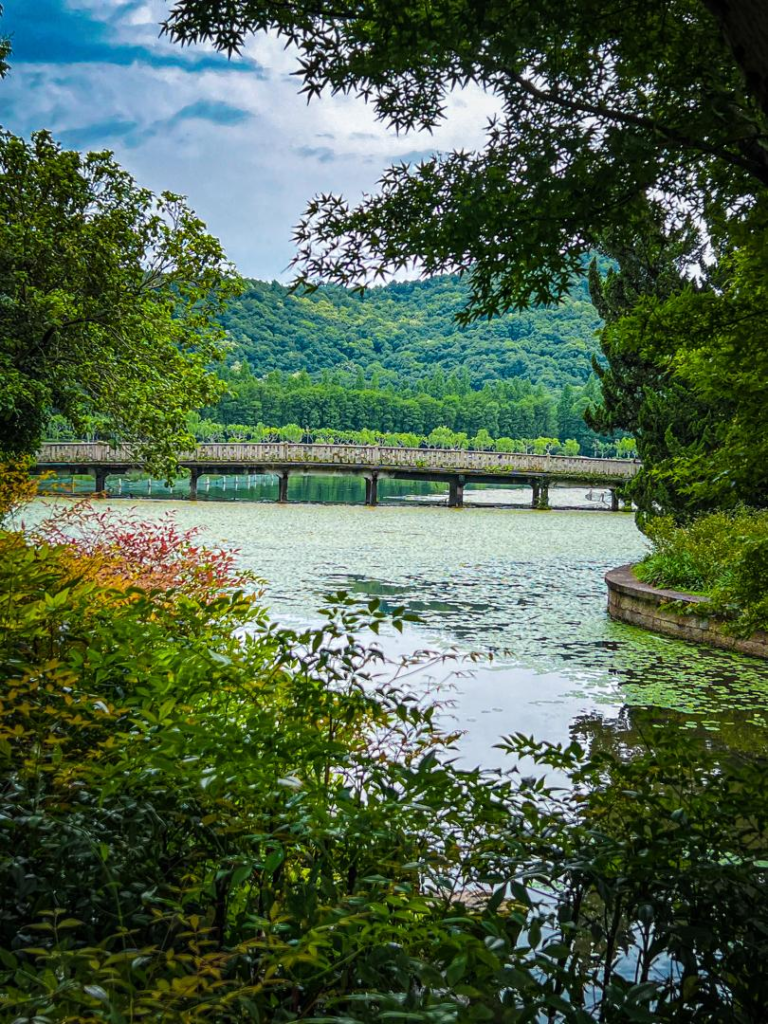
Hangzhou may be a full-fledged city, but West Lake changes everything.
Every day, I explored a different corner of the lake — long, gentle walks under willow trees, quiet benches facing still water, and even a rainy afternoon spent reading under a sheltered pavilion. Despite the busy streets beyond, West Lake feels like a deeply serene world within a world.
Hangzhou showed me that you don’t need remote mountains to practice slow travel. You just need a place with pockets of peace — and a willingness to sit still long enough to find them.
Wakayama, Japan
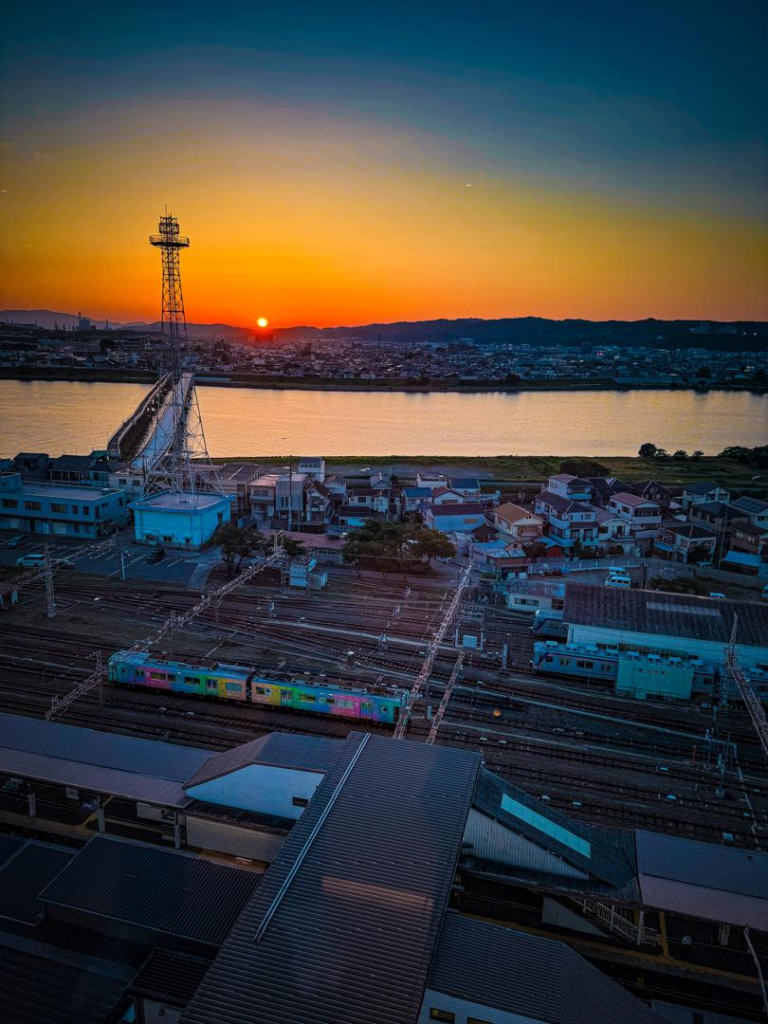
Wakayama is one of the most unassuming destinations I’ve ever visited — and one of the most rewarding. The sunsets alone feel like a meditation. But what stayed with me even more were the people: warm, patient, helpful, even with limited English.
I took a day trip to Koyasan and wished I had stayed longer. The atmosphere was so peaceful, so grounding, that five days in Wakayama didn’t feel nearly enough.
When thinking about how to choose a slow travel destination, consider places known not for attractions, but for energy — places where kindness is the culture, and quiet moments are easy to find.
I have a longer list of slow travel experiences — a 16-day road trip through the rugged highlands of Scotland, and days spent living on a houseboat in the backwaters of Alleppey in India — but those stories deserve their own posts.
For now, these three destinations remind me that slow travel is not about where the world tells you to go, but about where your heart feels safe enough to slow down.
When You Slow Down, Life Expands
Looking back on all the places I’ve wandered through, one thing becomes clear: the more I slowed down, the more the world opened up. Not in the dramatic, cinematic way we often imagine travel to be, but in small, intimate ways — a conversation with a stranger, a quiet moment by a lake, the comfort of returning to the same café two days in a row, the feeling of finally hearing your own thoughts.
Slow travel changes you because it gives you permission to be fully present. It teaches you that rest is not a luxury. That stillness is not wasted time. That seeing less can sometimes help you feel more. And that some of the most meaningful moments happen not when you chase them, but when you leave enough space for them to arrive naturally.
If you’ve been tired, overwhelmed, or feeling like life has been moving faster than you’d like, maybe slow travel is the gentle pause you’ve been needing. Try choosing one destination, staying a little longer, planning a little less, and allowing yourself to experience a place in its own rhythm.
Start small. Start softly.
And let the world meet you where you are.
More slow travel guides are coming soon. Stay tuned.
